Sound Refuge Pavilion
Immersive sound installation and exhibition presented as part of Barcelona 2026,
World Capital of Architecture, UNESCO–UIA
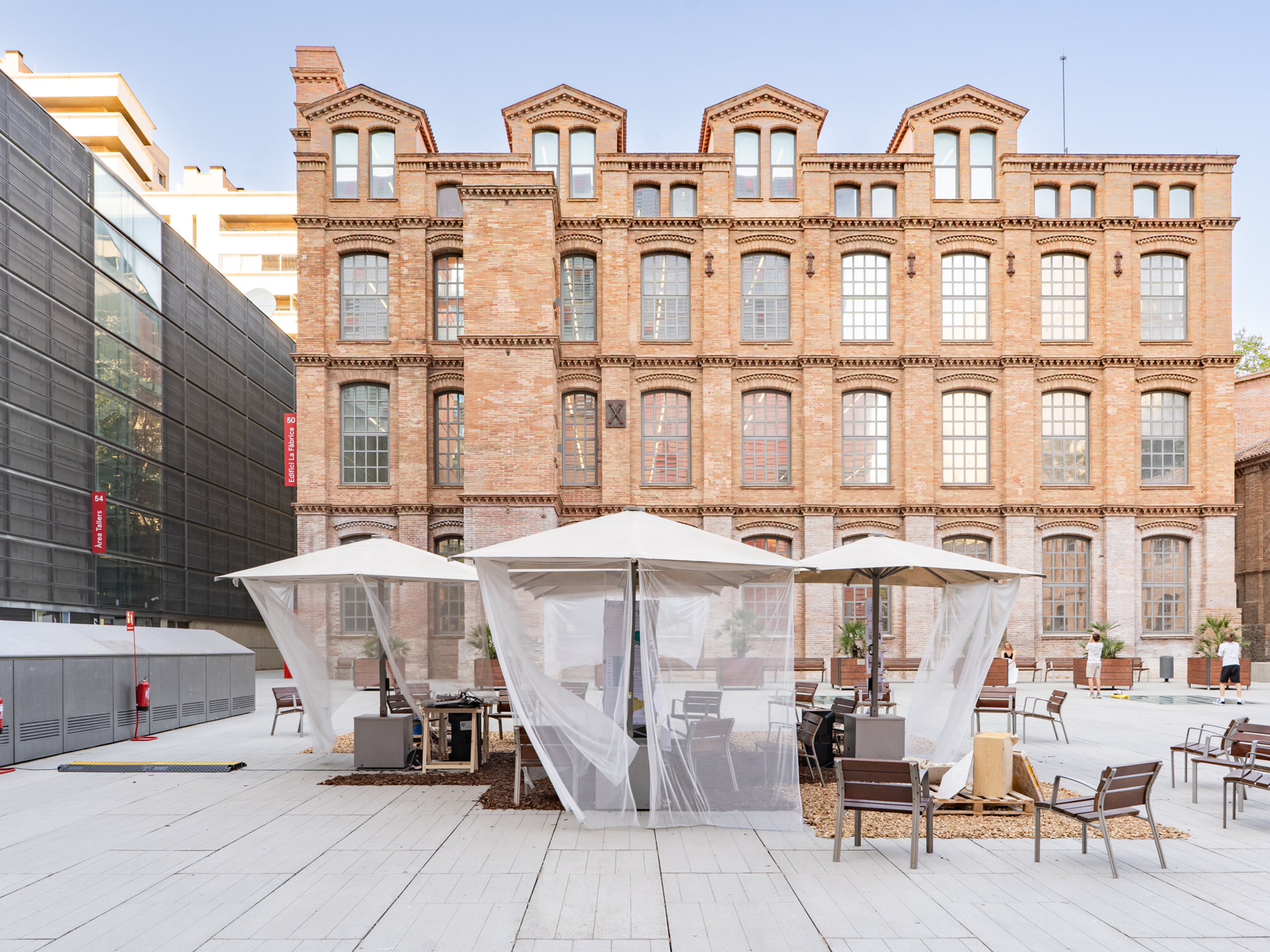
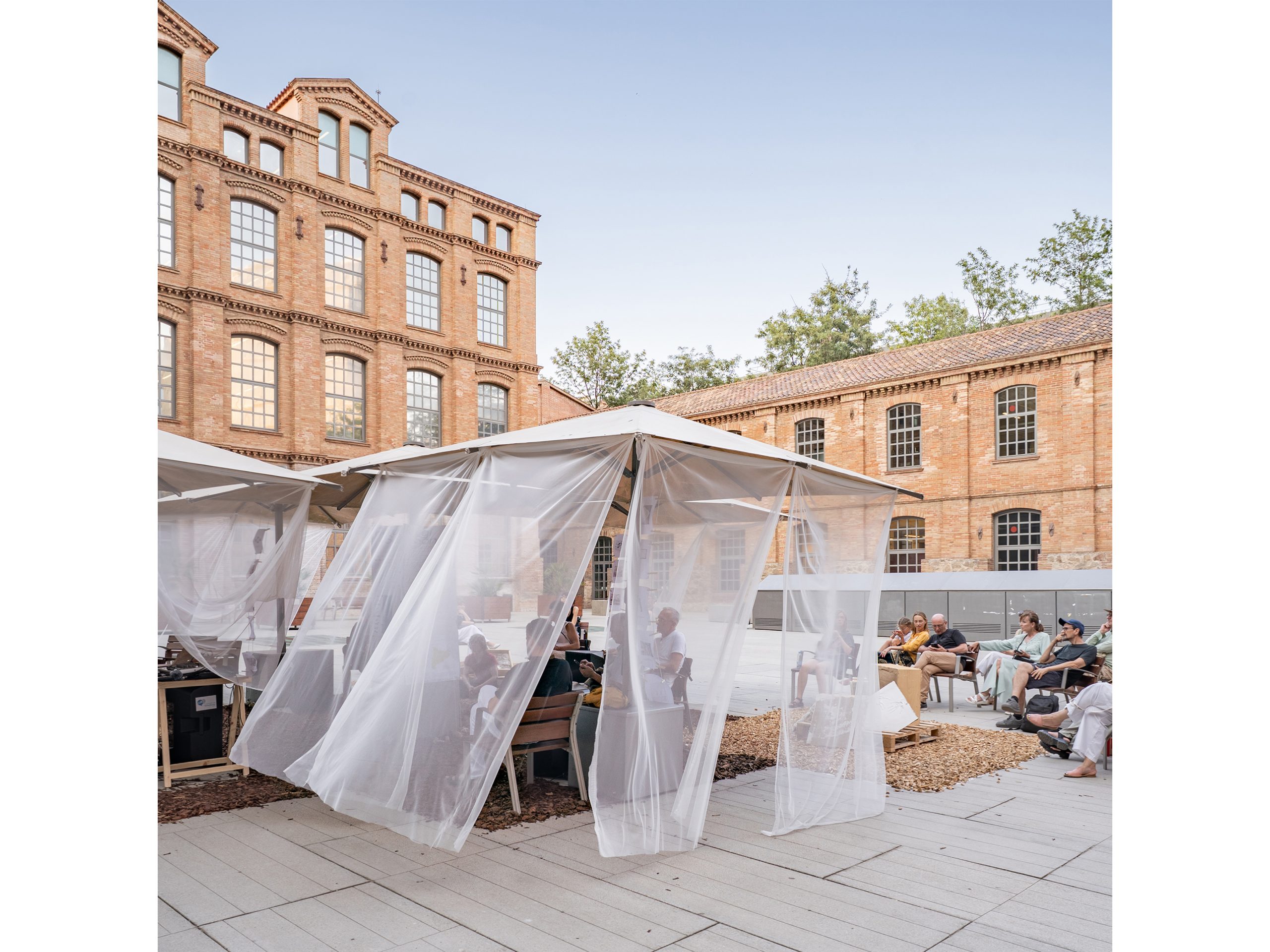
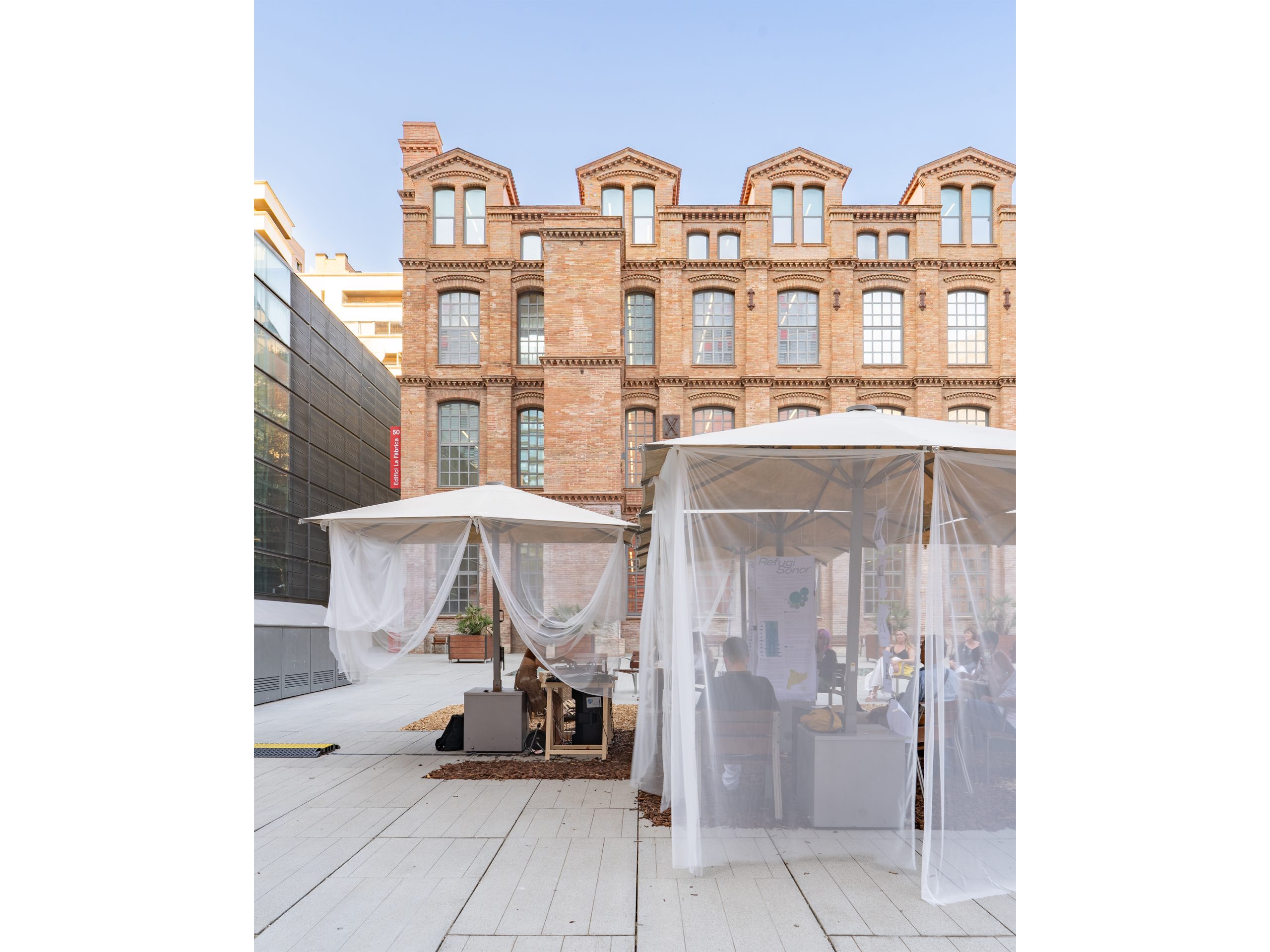
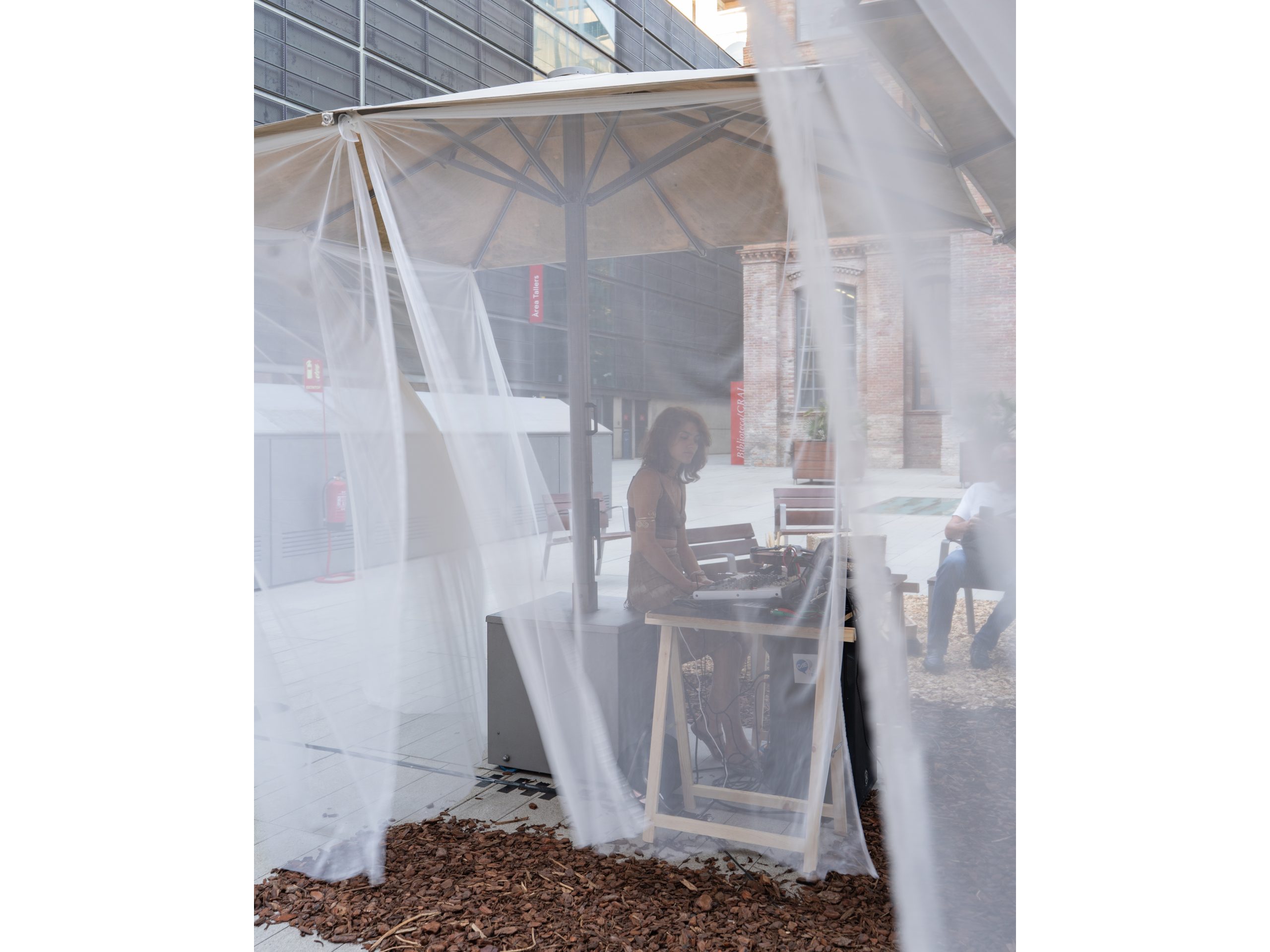
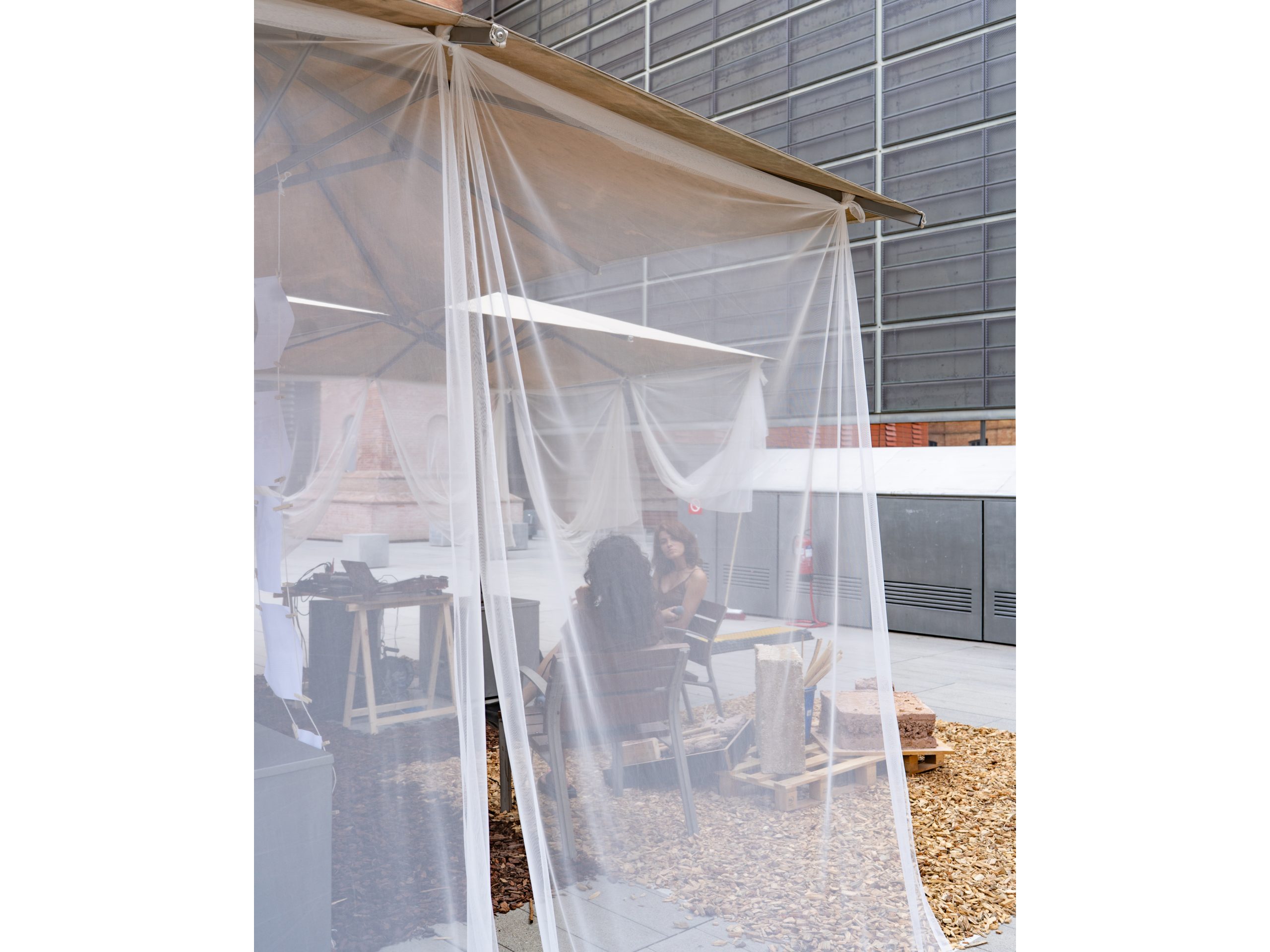
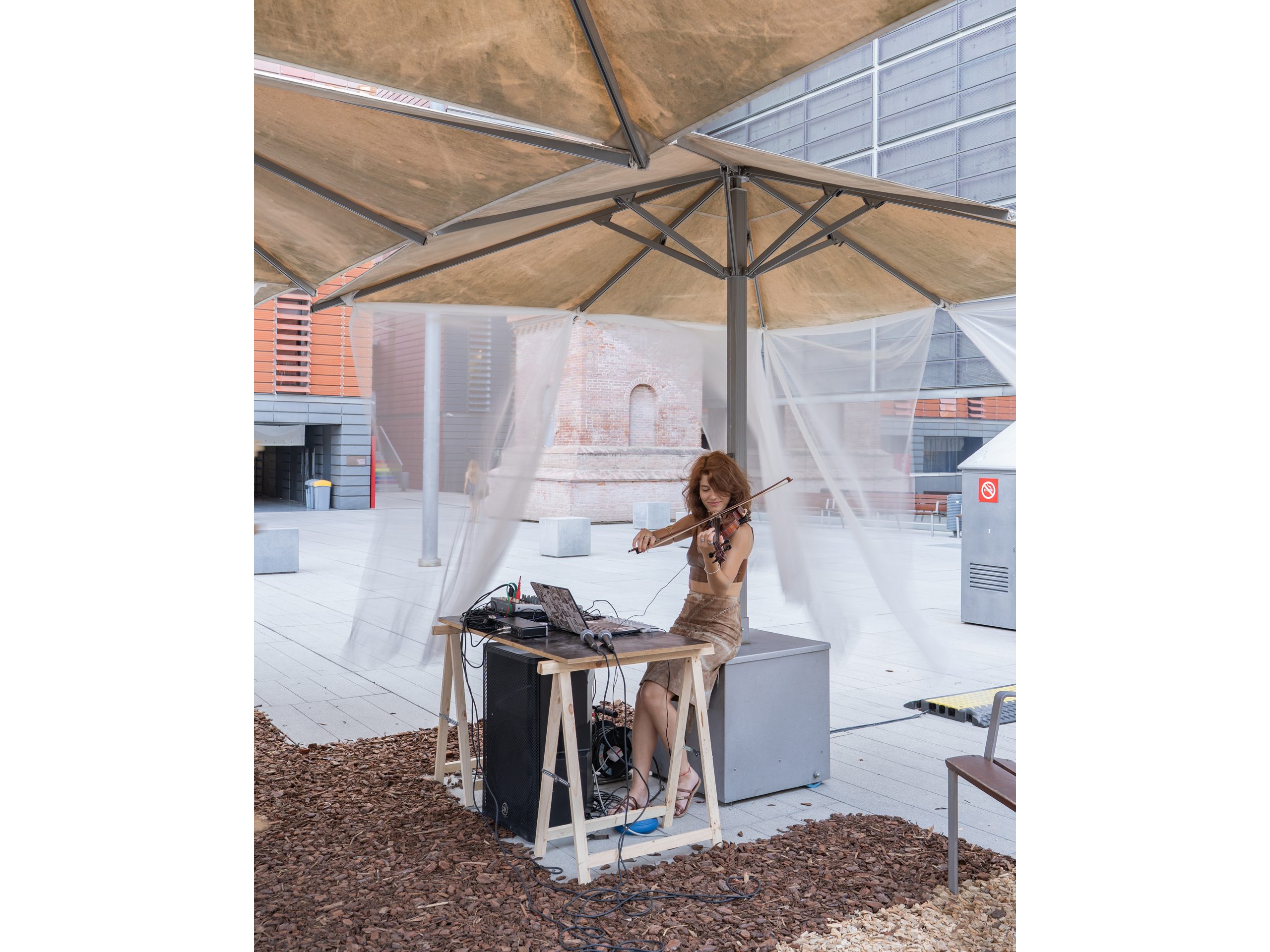
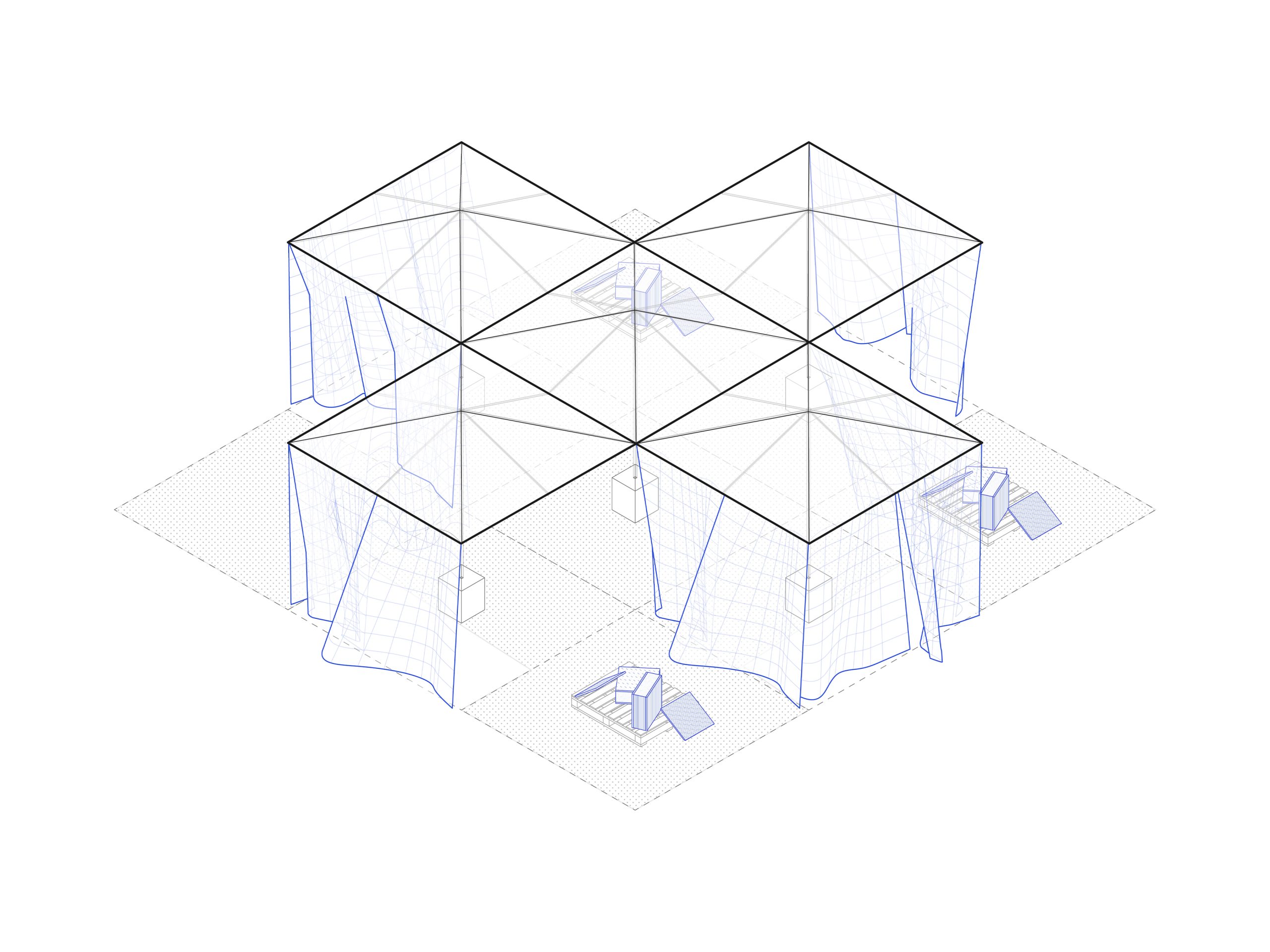
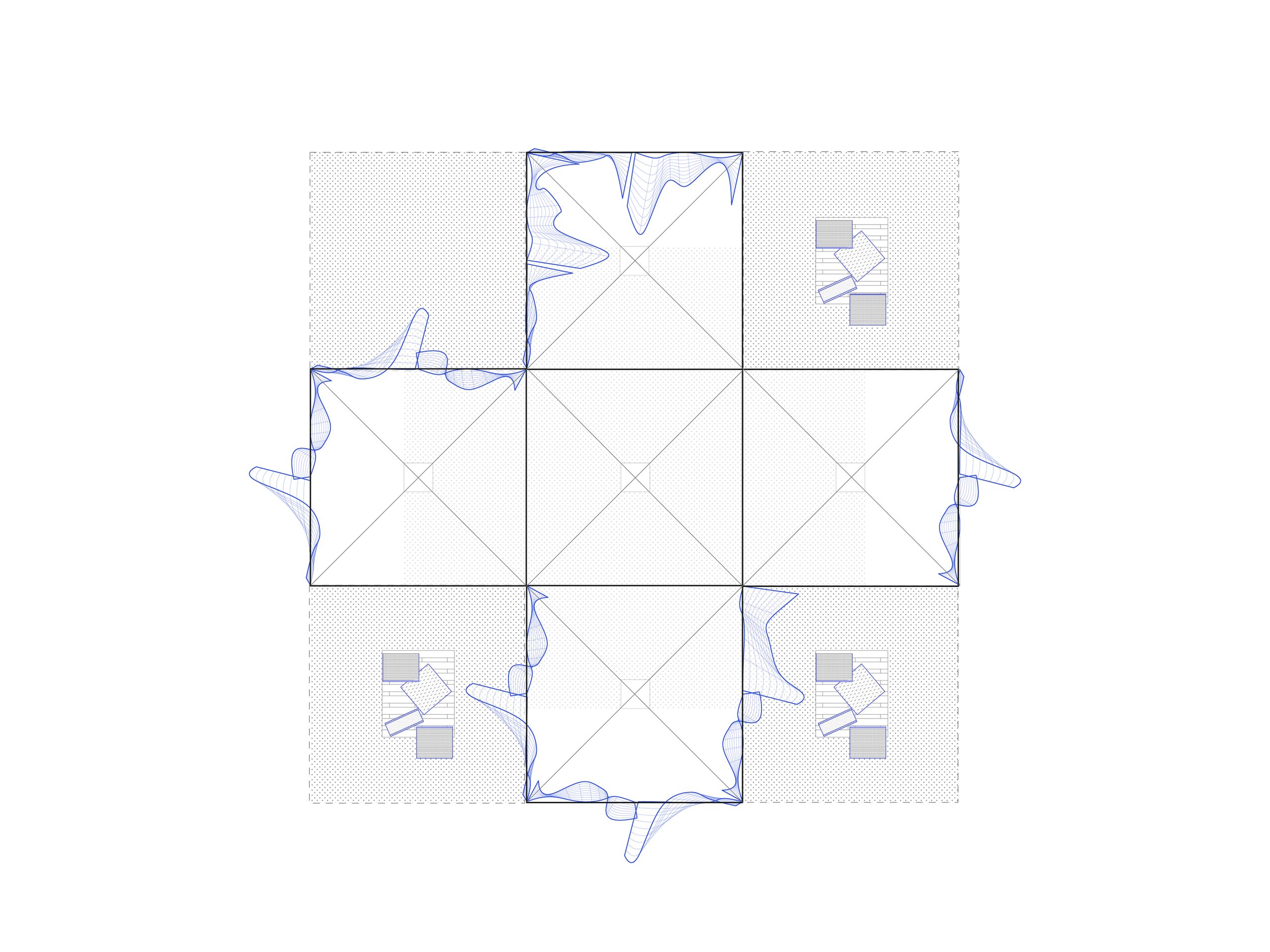
Architecture, music, and technology against noise pollution: an exhibition of biodegradable acoustic insulation materials and a sound installation that transforms street noise into music.
Sound Refuge is a project that brings together architecture, music, and technological innovation to reflect on noise pollution and imagine new urban typologies. The project proposes an immersive experience that transforms the noise of the city into music — an artistic intervention aimed at raising public awareness.
From June 29 to July 3 – 2026, an ephemeral pavilion located at the Poblenou Campus became a sound refuge in the heart of Barcelona: a space designed to disconnect from acoustic saturation and reconnect with nature. The pavilion hosted an exhibition of biodegradable acoustic insulation materials developed by students from ETSAV, as well as five original musical compositions created from sounds recorded in different natural landscapes across Catalonia.
Thanks to a sensor system developed by the Music Technology Group at UPF and predictive artificial intelligence software created by inLab FIB-UPC, the compositions reacted in real time to street noise.
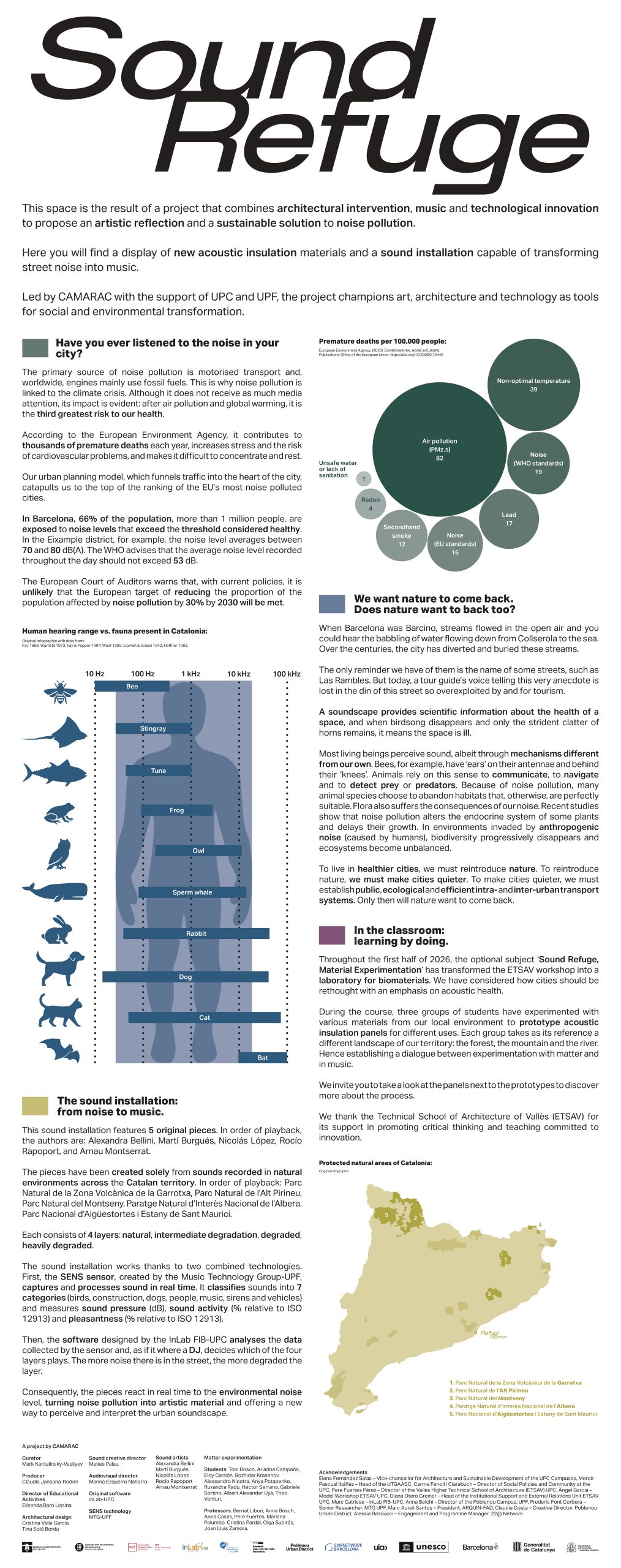
Noise pollution was one of the most overlooked environmental issues within the climate crisis. According to the European Environment Agency, it contributed to thousands of premature deaths every year and directly affected people’s physical and emotional health, increasing stress, cardiovascular problems, and difficulties with concentration and rest.
Sound Refuge was a laboratory where architecture, technological research, and art intertwined to help imagine healthier cities and improve the quality of life of all their inhabitants, while reclaiming the role of art and architecture as tools for social and environmental transformation.
An initiative by the CAMARAC collective with the support of the Escola Tècnica Superior d’Arquitectura del Vallès, the Universitat Politècnica de Catalunya, and the Universitat Pompeu Fabra.
Curator: Mark Kantalinsky-Vasilyev
Production: Clàudia Jansana-Rodon
Sound Creative Direction: Maties Palau
Educational Activities Coordination: Elisenda Baró Lissina
Architectural Design: Cristina Valle García and Tina Solé Borda
Software Development: inLab-UPC
Sensors: MTG-UPF
Sound Artists: Rocio Rapoport, Martí Burgués Carreño, Alexandra Bellini. Nicolas Lopez Ruiz and Arnau Montserrat
Organizers
Associació CAMARAC / Escola Tècnica Superior d’Arquitectura del Vallès – ETSAV – UPC / Campus del Poblenou. Universitat Pompeu Fabra – UPF